Coaching vs. monitoring
Many support teams have a monitoring practice masquerading as a coaching practice. QA scores go into a spreadsheet. An agent is told their score. No behavior changes.
Monitoring tells agents how they performed. Coaching tells them why and what to do differently. Platforms like AItocha CX surface per-agent QA data and coaching flags automatically, reducing the manual effort of identifying which interactions to review.
The 30-minute session structure
10 minutes: agent self-review. The agent reviews the same 2–3 tickets the manager will discuss and rates their own performance first. This activates self-reflection before feedback lands, making feedback more effective and less defensive.
15 minutes: manager feedback on specifics. Not “your empathy score was 3/5.” Specific: “In this exchange, when the customer expressed frustration, you moved to the solution before acknowledging it. Here’s what you could have said instead.” Concrete examples, alternative language, the reasoning.
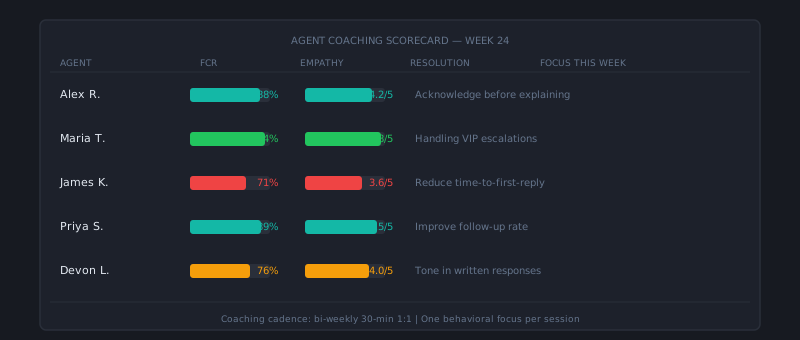
5 minutes: one focus for the next period. Agree on a single behavioral focus for the next two weeks. One thing, not five. Multiple focus areas dilute attention; one creates a genuine practice target.
Feedback that changes behavior
Anchor to a specific moment. “You handled that customer well” is encouragement. Feedback names the exact moment and the exact behavior.
Observation vs. interpretation. “You interrupted the customer” is an observation. “You don’t listen” is an interpretation. Feedback on observations is actionable; feedback on interpretations triggers defensiveness.
Ask questions more than you explain. “What were you trying to do when you offered the refund before checking the account?” produces more insight than explaining what should have happened.