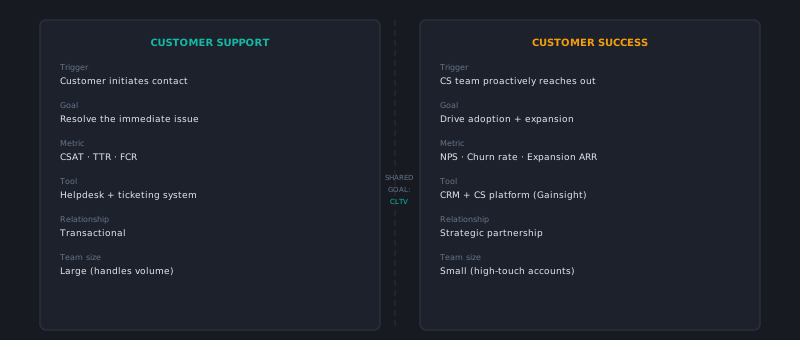
Two functions, one customer
Customer Support is reactive and transactional. A customer has a problem; support resolves it. The interaction is initiated by the customer, scoped to the specific issue, and ends when resolved.
Customer Success is proactive and relational. CS manages the ongoing health of the customer relationship, ensuring the customer gets lasting value from the product. CS doesn’t wait for problems — it monitors health signals and intervenes before problems occur.
The boundary in practice
Clear at the extremes:
- Customer can’t log in → Support
- Customer hasn’t logged in in 6 weeks → Customer Success
- Payment failed → Support
- Customer approaching renewal and hasn’t used the feature they bought for → Customer Success
The boundary blurs when a support interaction reveals underlying dissatisfaction. That starts as a ticket and becomes a CS signal.
Handoff protocols
The most common breakdown: support resolves the immediate issue and closes the ticket, but never surfaces the underlying dissatisfaction to CS. The customer continues at risk; CS has no signal.
Build explicit handoff triggers from support to CS:
- Customer used the word “cancel” or “refund” in a support interaction
- CSAT score was 1 or 2 after a resolved ticket
- Customer contacted support 3+ times in 30 days
- Issue required executive escalation
When any trigger fires, a handoff task is created for the assigned CS manager with relevant context. CS acknowledges within 24 hours.
The reverse handoff also matters: when CS identifies a product bug through relationship work, they route it to support ops — not just engineering — so the front line is prepared for incoming volume. AI-first support platforms like AItocha CX handles the operational support layer — tickets, routing, automation — so CS teams can stay focused on strategic relationship work.