The problem without a policy
Without a defined policy on abusive customer behavior, agents are left to manage it individually. Some agents tolerate treatment they shouldn’t; others escalate situations that could have been de-escalated. Managers make inconsistent decisions about when to end a call or restrict an account. Agents who absorb abuse without institutional support burn out faster.
A policy creates consistency, gives agents authority to act, and protects the company from the reputational risk of either too much tolerance or over-enforcement.
Defining “abusive” specifically
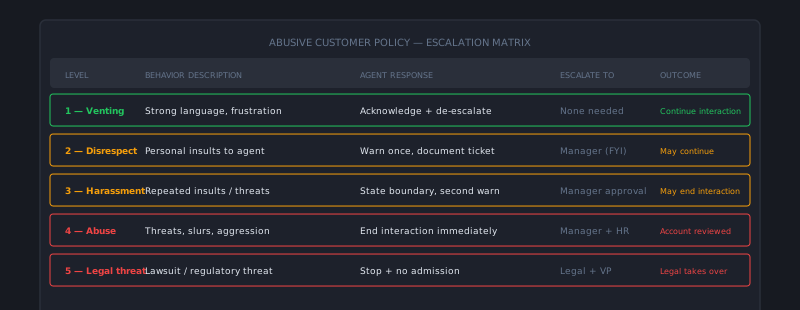
The policy needs to define, not just gesture at, what constitutes abusive behavior. Categories:
Personal insults and harassment: Directed at an agent personally, not at the company or situation. (“You’re an idiot” vs. “Your company is terrible at this.”)
Threats: Threats of legal action, public exposure, or physical harm. The first two require escalation to management; the third requires immediate call termination and documentation.
Sustained aggression: A customer who has been provided with a resolution path but continues to escalate aggression past a reasonable threshold.
Discriminatory language: Racial, gender, or other slurs directed at agents.
The agent response protocol
Define exactly what agents are authorized to do:
- First occurrence: Acknowledge the frustration, redirect to the issue. “I understand you’re very frustrated — I want to help you resolve this. To do that I need us to focus on the situation.”
- Second occurrence: Warn clearly. “I need to let you know that I’m not able to continue this conversation if it continues in this direction. I want to help you, but I also need us to keep this conversation respectful.”
- Third occurrence: Terminate the interaction. “I’m going to end this call/chat now and follow up via email with resolution options.”
Agents should never have to ask a manager for permission to end an abusive interaction. The policy grants them that authority.
Documentation and follow-up
Every terminated interaction is documented in the ticket with the specific language used and the specific protocol step taken. A manager reviews within 24 hours — not to second-guess the agent, but to ensure the documentation is complete and to determine whether any follow-up with the customer is appropriate. Platforms like AItocha CX support automatic escalation flags and interaction logging that make policy enforcement easier to document and review.