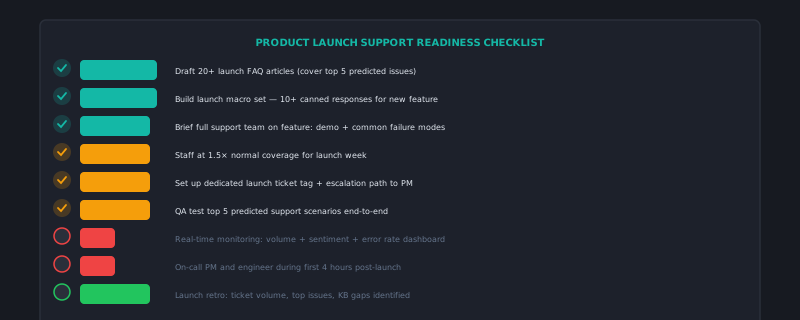
Product launches are support events
Every product launch is also a support event. New features generate new questions, new confusion, and new failure modes. Teams that treat support preparation as an afterthought pay for it in missed SLAs, agent stress, and customer frustration in the first 72 hours.
Four weeks before launch
Volume forecast: Work with product to understand the expected user impact. How many customers will see the new feature on day one? What percentage are likely to have questions? Apply a baseline rate from comparable past launches.
Content audit: What help center articles need to be created or updated? What playbooks need to be written? Set a deadline of one week before launch for all content to be reviewed and ready.
Escalation design: What issues will require engineering involvement? What are the triggers? Who is the engineering point of contact during the launch window?
One week before launch
Agent training: Run a 60-minute training session covering: what the new feature does, common customer questions and answers, the escalation path for issues beyond agent knowledge. Record it for agents who can’t attend.
Tooling check: Are routing rules updated to tag and route launch-related tickets correctly? Is the team monitoring dashboard set up to surface launch-related volume separately from baseline?
First 72 hours
This is the highest-risk window. Assign a dedicated launch support monitor — one person whose job for 72 hours is watching the queue for patterns, escalating issues to engineering, and updating agents in real time when new issues or fixes emerge.
Post-launch review
48–72 hours after launch, run a 30-minute review:
- What were the top 5 ticket categories related to the launch?
- Which were predicted? Which were surprises?
- What content was missing that should have been ready?
- What would we do differently for the next launch?
The post-launch review is how support ops improves with each cycle. An AI-first platform like AItocha CX can absorb launch-day volume spikes through automated deflection without requiring you to staff up temporarily.