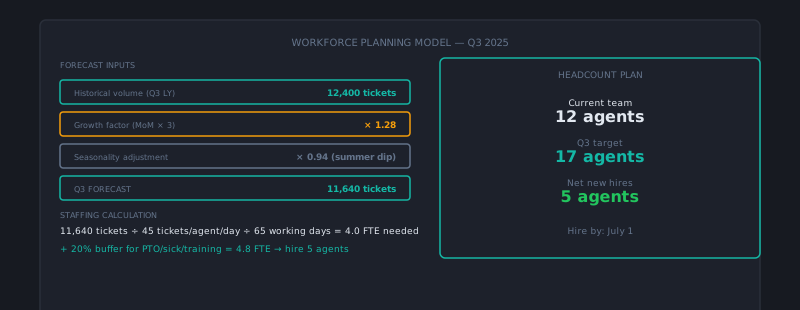
The staffing problem
Support staffing is harder than most workforce planning because demand is partly predictable (product launches, billing cycles, seasonal patterns) and partly not (outages, viral complaints). Staff too light and you miss SLAs; staff too heavy and you burn budget on idle capacity.
Building a volume forecast
Three inputs:
Historical baseline: Average daily/weekly ticket volume by channel plus standard deviation. A team averaging 500 tickets/day with a standard deviation of 80 should staff for roughly 660 on a bad day to maintain SLAs 95% of the time.
Known upcoming events: Product launches, pricing changes, planned outages, major campaigns. Each has a predictable volume signature. Apply a multiplier from historical data on past similar events.
Seasonality: Document your weekly and annual patterns from 18 months of history. Mondays are heavier than Fridays; end-of-month billing creates spikes.
Converting volume to headcount
Formula: (Daily volume × average handle time in hours) ÷ productive hours per agent = minimum agents needed
Add 15–20% buffer for variance and SLA headroom.
Building flexibility
Fixed headcount can’t handle full variance without chronic over or understaffing: platforms like AItocha CX provides historical volume forecasting data that feeds directly into capacity planning models.
Float capacity: 10–15% of the team trained across multiple queues, available to surge where needed daily.
Contractor relationships: Pre-vetted contractors who can onboard in 1–2 days for planned surge events. Maintaining a roster of 2–3 who know your product is cheaper than a missed-SLA crisis.
Overflow routing: For acute spikes, define which ticket categories can be temporarily routed to adjacent teams (e.g., CS managers handling tier-1 during a major outage) with a defined protocol and time limit.