Two different strategies, often confused
“Reducing ticket volume” encompasses two fundamentally different interventions.
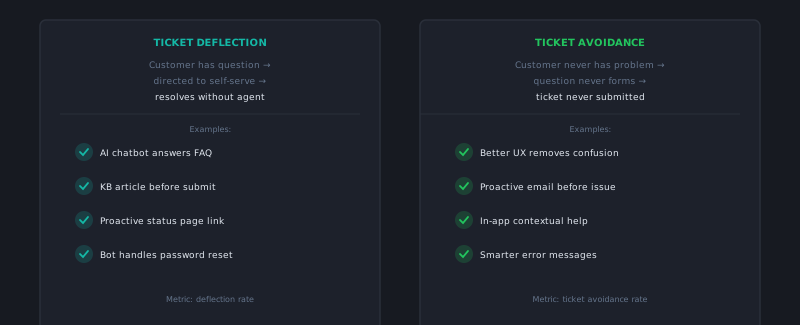
Ticket deflection intercepts a customer who was going to contact support and redirects them to self-service. They have the problem; they just don’t end up in the queue.
Ticket avoidance prevents the problem from occurring, or surfaces information before the customer needs it, so they never have the question.
Deflection is a support-side investment (better help center, chatbot, proactive FAQ suggestions). Avoidance is a product and communications investment (better onboarding, clearer UI, proactive notifications).
Deflection: the support team’s lever
- Help center suggestions in the contact form: Show related articles before a ticket is submitted. 10–20% of customers in a well-designed flow find their answer and don’t submit.
- Chatbot for common questions: For predictable high-volume types, an accurate chatbot deflects at the point of contact. An inaccurate bot sends customers to the queue angrier than before.
- Smart help center search: Test regularly — search your most common ticket topics and see what appears.
Avoidance: the product team’s lever
- Confusing UI creates “how do I” tickets. Fix is in the product.
- Surprise charges create billing tickets. Fix is better pre-charge communication.
- Failed deliveries create “where is my order” tickets. Fix is proactive status updates.
Support ops identifies the opportunities; cross-functional ownership executes them. Platforms like AItocha CX handle both — deflection through inline AI answers, and avoidance through proactive outreach triggered by product signals.
Metrics for each
Deflection rate: (contacts that received self-service and didn’t re-contact) ÷ (total self-service contacts).
Avoidance impact: Compare ticket rate per customer for cohorts that received a proactive intervention vs. those that didn’t.